Summer temperatures reaching 95 degrees dry local clay rapidly, while winter rains cause seasonal ground swelling that shifts subgrades up to two inches.
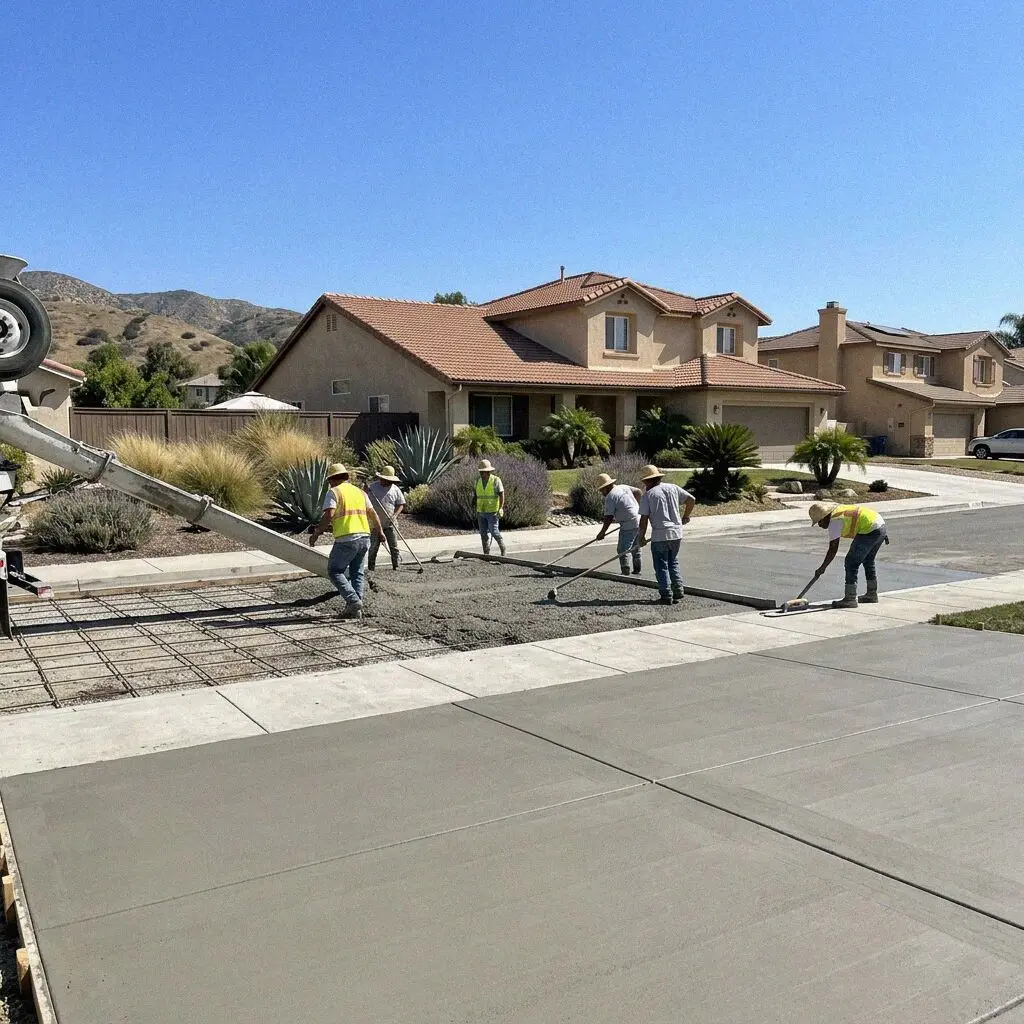
Subdivisions across West Covina expanded rapidly during the midcentury boom, creating residential tracts where rear yards slope toward the San Jose Hills. Unstable clay deposits beneath these neighborhoods demand careful moisture management. Guidance from the Portland Cement Association emphasizes that pouring flatwork directly on dry clay results in rapid moisture loss from the fresh mix, leading to cracking before the slab achieves full design strength.
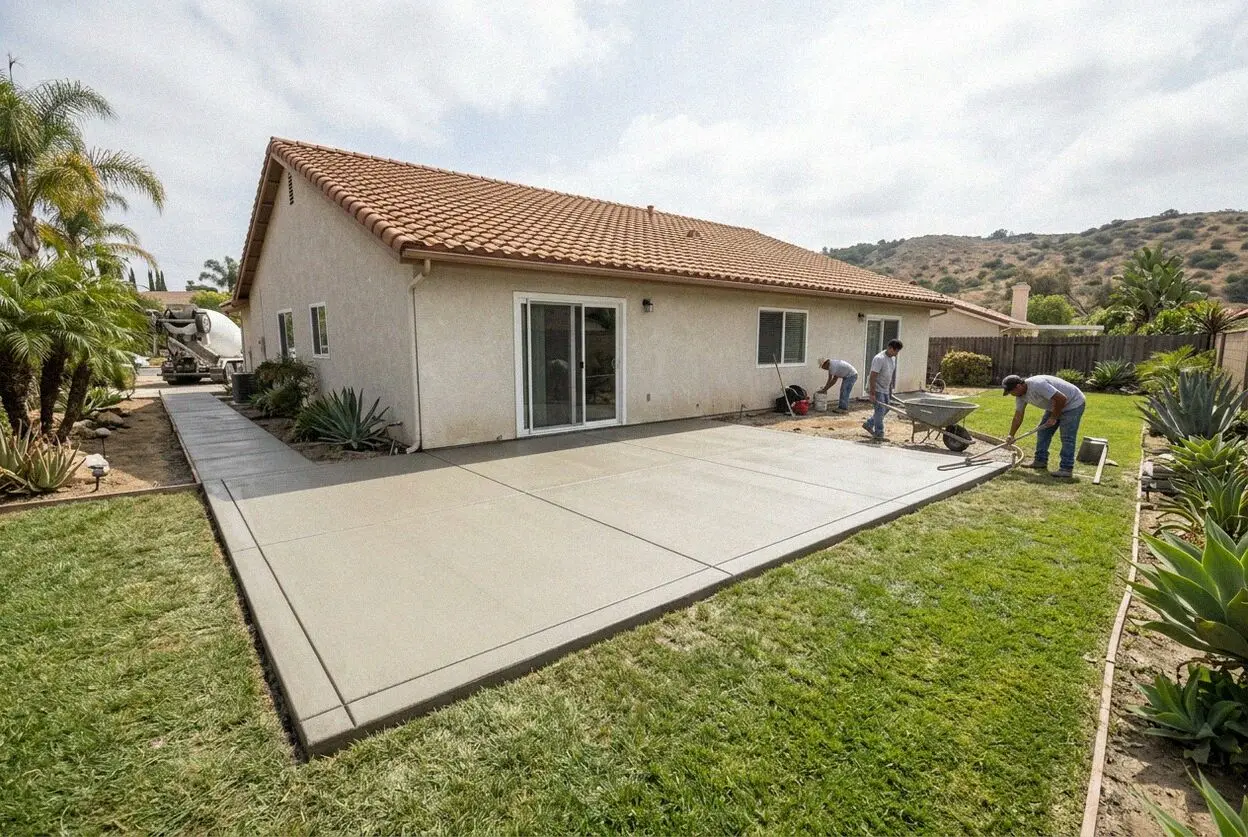
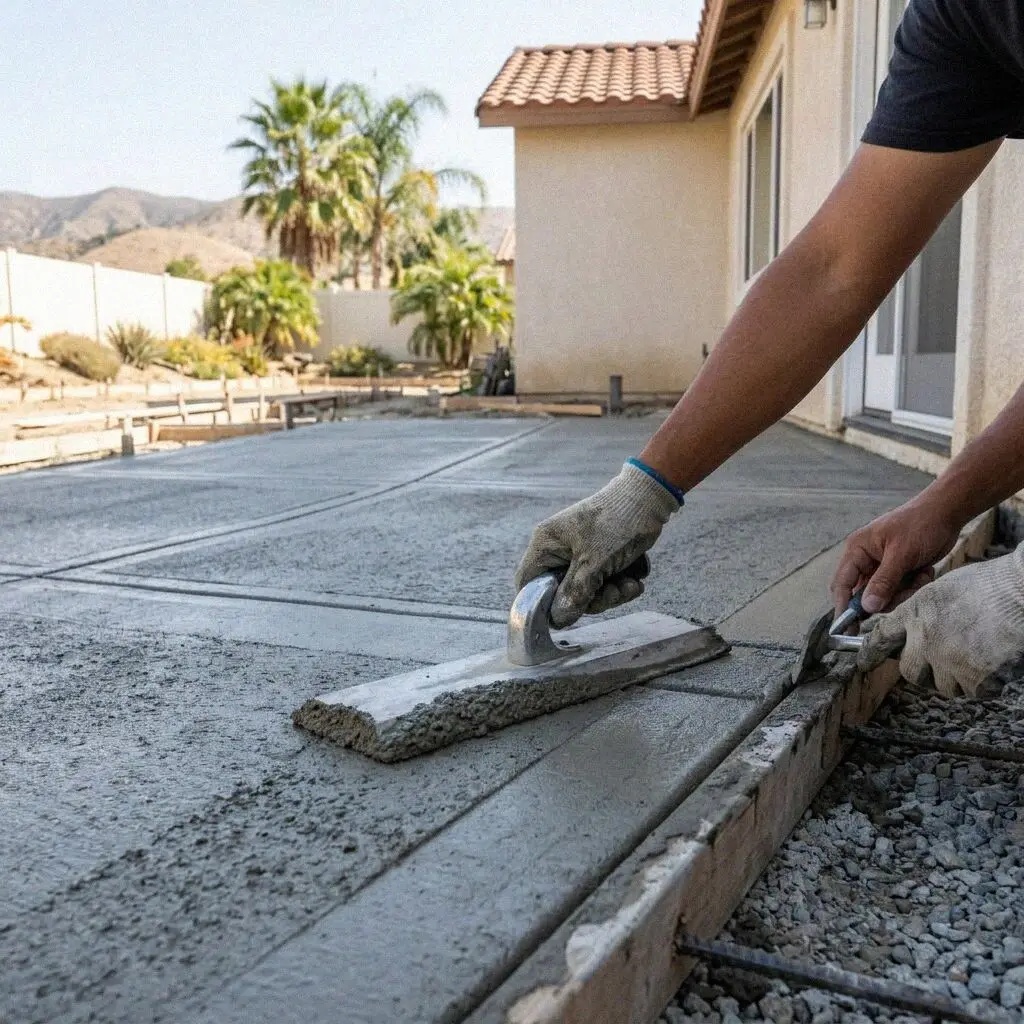
With an average household size of 3.91 people across a city population of 107,598 in Los Angeles County, backyard patios function as heavily used outdoor gathering spaces. We mitigate local ground swelling by excavating four inches of native clay, placing crushed rock aggregate, and tying rebar across two foot intervals. Control joints placed at eight foot spacing ensure that any minor thermal movement follows straight, clean lines rather than jagged fractures.