Serving West Covina, CA and surrounding areas.(626) 263-1740
Citrus West Covina Concrete

Foundation Installation in West Covina, CA Built for Expansive Hillside Clay

Citrus West Covina Concrete installs residential foundations with footings tied 24 inches into solid ground to withstand shifting clay. Every estimate is measured and written on site

Google reviewsFacebook reviewsBetter Business Bureau reviews5.0 Stars Our customers' own rating · Facebook, Google and the BBB
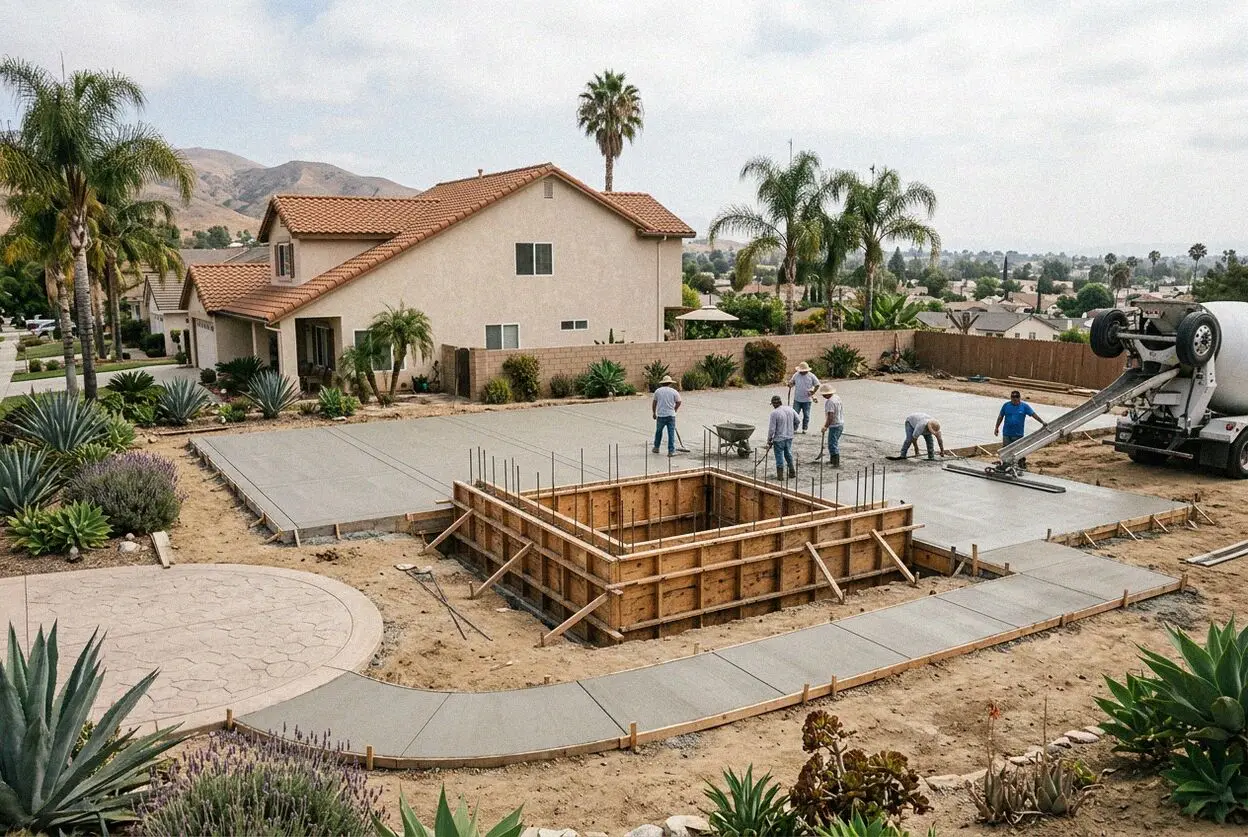
Foundation trenches and rebar grids inspected at a West Covina house
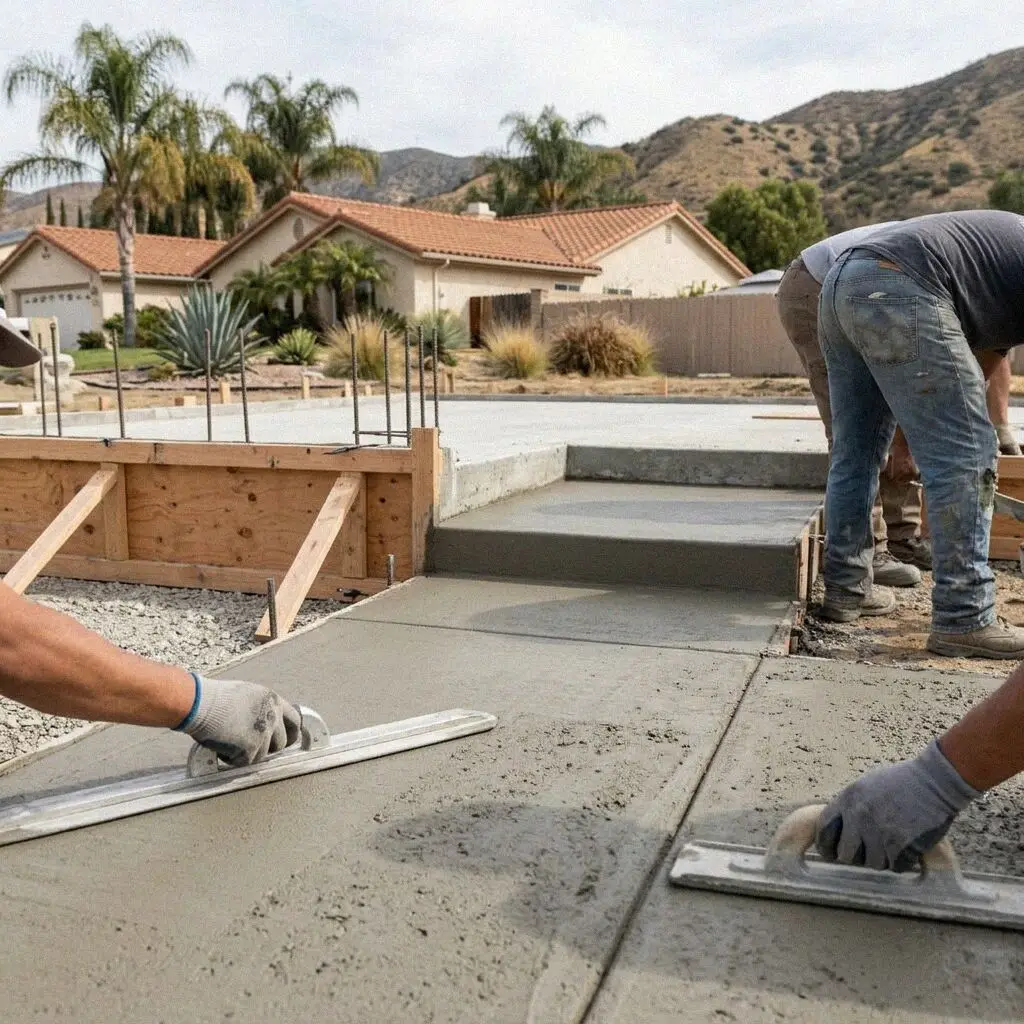
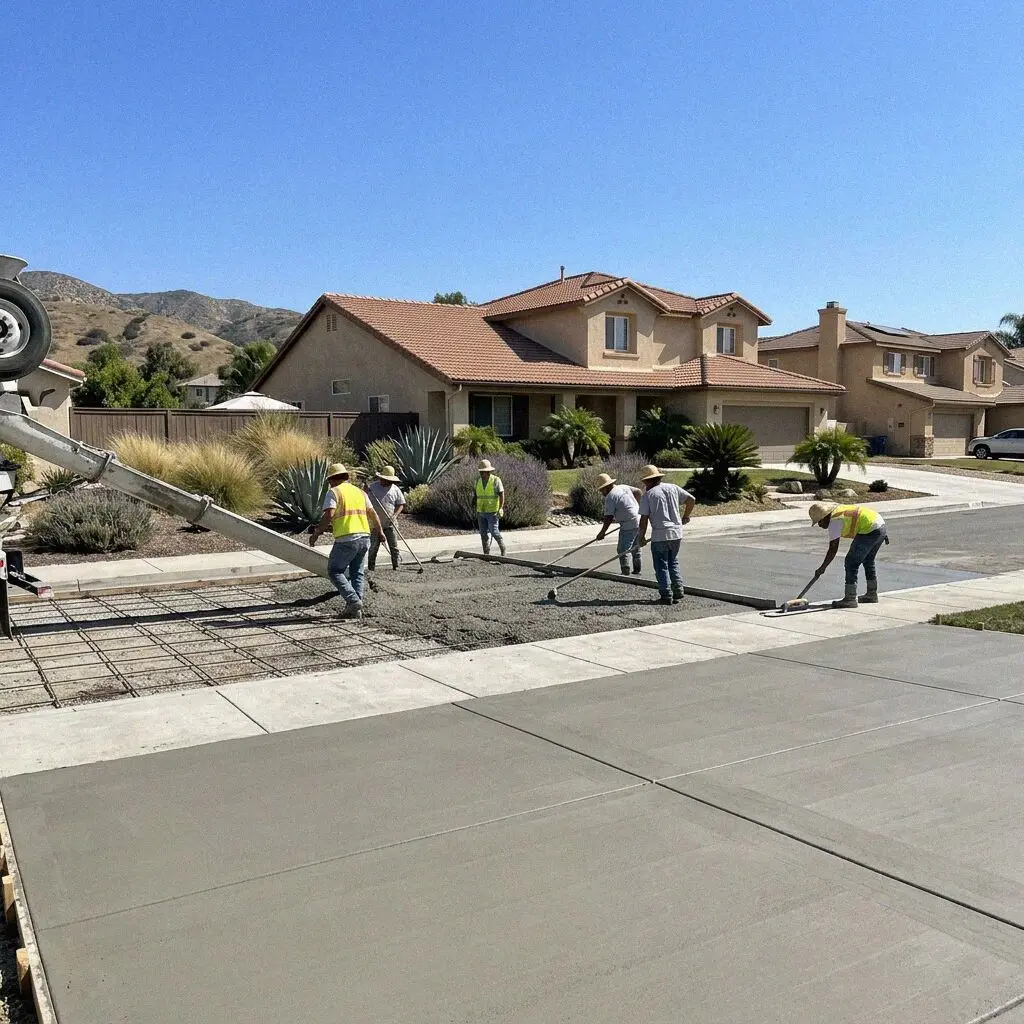
Poured concrete stem wall and footings cure on a West Covina jobsite

Footing Design

How We Pour Structural Foundations in West Covina

West Covina sits over heavy alluvial clay that swells during winter rains and shrinks under summer heat. When homes rest on shallow perimeter footings, this expansion creates uneven uplift that cracks walls and jams interior door frames. Citrus West Covina Concrete excavates foundation trenches to engineered depths, anchoring continuous perimeter footings into unyielding subgrade so structural loads remain balanced across every season in the San Gabriel Valley.

Data recorded by the USDA Web Soil Survey confirms local soil profiles show moderate to very high shrink and swell potential. In neighborhoods surrounding Cortez Park and into the San Jose Hills, unreinforced slabs buckle under these soil forces. Our crews run tied steel rebar through both grade beams and perimeter pads, creating a monolithic grid that resists ground movement rather than flexing under localized pressure.

Owner Ruben Alcaraz brings 16 years of concrete trade experience before establishing this firm in 2019, holding a CSLB C-8 license with liability insurance on every job. Each foundation pour receives exact subgrade compaction, verified moisture barriers, and continuous quality checks before the batch trucks discharge. That disciplined process ensures structural additions and new residential builds remain square and level for decades.


Warning Signs

When does a West Covina foundation need replacement?

Sticking Doors and Windows

Interior doors that bind in their frames or windows that stick reveal foundation movement. Expansive clay pushes upward beneath one section of the slab while footings settle. That differential shift twists the timber framing, signaling that your foundation subgrade has moved.

Stair Step Cracks in Exterior Stucco

Homes built during the 1950s building boom across West Covina frequently sit over unreinforced stem walls. When winter moisture enters the clay, soil swells beneath the footing edge and creates diagonal stair step cracks through exterior masonry.

Hairline Cracks Across Slab Surfaces

Hairline fractures running across an exposed concrete slab often look harmless to homeowners. Water migrates through these narrow gaps into subgrade clay, accelerating cyclical swelling that widens the fracture within two seasons until structural reinforcement snaps and slabs displace.

Separating Chimneys and Brickwork

A gap widening between your exterior brick chimney and the house wall indicates severe footing rotation. Postponing work allows the footing to drop further into soft clay over six to twelve months, dramatically increasing structural stabilization costs and creating fall hazards.

Build Standard

Every Structural Foundation We Pour in West Covina

We construct residential foundations that resist active clay movement by combining deepened footings, calibrated steel schedules, and high strength ready mix concrete poured to strict structural specifications on every site.

Trench Excavation and Dig

We remove uncompacted topsoil and old concrete, excavating clean footing trenches 24 inches down into firm undisturbed ground.

Subgrade Compaction Check

Subgrade density is tested with a dynamic cone penetrometer, requiring mechanical recompaction if bearing capacity falls short.

Vapor Barrier Placement

A heavy 15 mil puncture resistant poly vapor barrier is installed across the pad to halt moisture migration into the floor slab.

4000 PSI Structural Mix

We place 4000 PSI commercial grade ready mix with low water cement ratios, offering fiber reinforcement or sulfate resistant batches.

Tied Grade Beam Corners

All perimeter footing junctions receive hooked rebar corners and continuous overlap splices to prevent lateral corner separation.

Deformed Steel Rebar Grid

Grade 60 number 4 steel rebar is tied on chairs at 16 inch centers, keeping reinforcement suspended for maximum tensile strength.

Clean Site and Form Strip

Wood forms are stripped, stakes removed, excess concrete hauled away, and grade elevations verified with an optical transit level.

Workmanship Guarantee

Your installation comes with a written workmanship guarantee against defects in how it was built, covering all structural slab placement.

Slab Types

West Covina Foundation Builds, Compared

Choosing the right foundation system depends on your lot slope, proximity to the San Jose Hills, and local soil expansion characteristics. Here is how our engineered foundation options perform under local structural conditions.

OptionLifespanTarget BuildMaintenanceCuring Time
Monolithic Slab60 to 80 yearsLevel valley lots and single story additionsInspect perimeter drainage every 12 months28 days for full design load
Post Tensioned Slab75 to 100 yearsExpansive clay parcels with high soil movementMonitor end anchor pockets every 3 years28 days after cable tension
Stem Wall and Footing70 to 90 years in placeTraditional 1950s West Covina tract homesClear crawlspace vents every 6 months28 days before framing
Drilled Caisson System80 to 100 yearsSteep San Jose Hills slope lots with slip risksGrade surface drainage channels every 2 years28 days to full cure

We inspect your soil conditions and structural plans on site to calculate exact footing depths and reinforcement layouts before issuing an estimate.

Excavated footing trenches prepared on a hillside lot in West Covina

Local Geology

What West Covina Clay Does to a Foundation

Summer temperatures above 95 degrees desicate clay soils, while winter rains generate upward ground pressures exceeding 3,000 pounds per square foot.

West Covina spans 107,598 residents living across both valley flats and rolling hillsides. In the elevated neighborhoods edging the San Jose Hills, soils contain dense montmorillonite clay minerals that expand dramatically when saturated. Standard footings poured without deep anchorage lift along the outer perimeter while the interior slab stays cold, cracking foundations down their central corridors. We prevent this by anchoring grade beams into deeper moisture stable strata.

Building guidelines from the Portland Cement Association show that moisture control during early hydration controls long term concrete strength. In local tracts where 64.2% of homes are owner occupied, foundations built in the 1950s often lacked moisture retarders under footings. We install thick polyethylene moisture membranes and specify precise water cement ratios so ground dampness cannot wick into residential floor assemblies.

Five Stages

How We Build a Structural Slab in West Covina

From initial site measurements to final transit checks, our team executes every phase according to structural building codes and certified engineering specifications for local clay soils.

1

Site Elevation Survey

We measure ground slopes, review structural blueprints, and survey property lines, recording grade elevation drops across the pad.

2

Permit Filing and Mix Order

We file plans with the West Covina Building Division, verify engineering approvals, and schedule batch plant deliveries for pour day.

3

Excavation and Soil Check

Crews excavate trenches down 24 inches, haul native spoils off site, and verify firm soil bearing capacity before formwork begins.

4

Steel Layout and Concrete Pour

Form boards are aligned, grade 60 steel is tied on chairs, and 4000 PSI concrete is consolidated with internal mechanical vibrators.

5

Form Strip and Final Walk

We clear forms, sweep the pad clean, complete the walkthrough, and hand over a written workmanship guarantee against defects in how it was built.

Cost Factors

What Decides Your West Covina Foundation Estimate

Foundation estimates reflect physical site conditions, required footing excavations, steel density, and the volume of structural concrete required to anchor your building securely against local soil pressures.

Single Family Home Foundations

Square footage, perimeter trench depth, and existing subgrade stability determine overall excavation and concrete material requirements.

Multi Family Grade Beams

Multi unit structures require heavier continuous grade beams and tighter steel spacing to support elevated two story residential loads.

Steep Hillside Lot Access

Parcels on steep San Jose Hills slopes require concrete line pumping, stepped footing trenches, and temporary access road construction.

Engineered Fibers and Mixes

High sulfate resistant cement or synthetic micro fibers require verification of soil chemical exposure on site before batching.

Because every property holds different soil characteristics and slope grades, Every estimate is measured and written on site (626) 263-1740 or send us a message.

Request Your On Site Foundation Inspection

Our licensed concrete team visits your property, evaluates local soil conditions, reviews your structural drawings, and calculates exact footing dimensions for your build. Every estimate is measured and written on site

Request a Free Estimate

Written on site · No obligation

By submitting, you agree to our disclosure and consent terms, including being contacted by Citrus West Covina Concrete.

Client Reviews

West Covina Property Owners on Our Foundation Work

Homeowners and builders across the San Gabriel Valley rely on our engineered foundations to keep their residential additions and structural builds plumb on reactive ground.

Google review

“Ruben and his team poured a 1,200 square foot foundation for our home addition near Cortez Park. They dug footings 24 inches down into heavy clay and completed the entire pour in 4 days. The inspector signed off immediately and the slab is dead level.”

M. Ramirez, West CovinaFoundation Installation · Google · 2026
Google review

“Our lot on the San Jose Hills slope had tricky access, but the crew pumped 45 yards of concrete up our long driveway without touching the landscaping. They tied every rebar intersection across the stepped footings and finished the job in 5 working days.”

J. Okafor, West CovinaHillside Foundation · Google · 2026
Facebook review

“Two months after our garage foundation was finished, I called with a question about curing moisture. Ruben Alcaraz answered within 1 business day, walked the slab with me in person, and verified every joint. That level of direct accountability is rare today.”

S. Whitfield, West CovinaFoundation Replacement · Facebook · 2026

Common Queries

Foundation Questions Asked in West Covina

Here are direct answers about soil movement, municipal building permits, curing schedules, and structural specifications for West Covina foundations.

(626) 263-1740
  • What determines the cost of a foundation here?

    Foundation pricing depends primarily on perimeter footing depth, the volume of concrete required, soil excavation difficulty, and the density of the rebar schedule. Sites located on the slopes of the San Jose Hills require stepped footings and concrete pump access, while level valley parcels require less excavation time. Every estimate is measured and written on site

  • How long does foundation installation take in West Covina?

    A typical residential foundation pour requires 4 to 6 working days on site. Clearing old concrete and digging trenches down to unyielding clay takes 2 days, placing forms and tying rebar takes another 2 days, and the pour itself finishes in 1 day. Concrete then cures for 7 days before framing can start, reaching full design strength at 28 days.

  • What is included in a West Covina foundation build?

    Every installation covers complete ground excavation, formwork, tied steel reinforcement, certified 4000 PSI ready mix, and structural consolidation. We also include two items frequently treated as extra line items by competitors, specifically the installation of a 15 mil vapor barrier and continuous transit verification of perimeter grade levels.

  • Do I need a permit for a foundation in West Covina?

    Yes, structural foundation installations always require a building permit from the West Covina Building Division. We handle plan submittals, pull the required building permits, and schedule mandatory city inspections before and after concrete placement. Outdoor flatwork like ground level backyard patios does not require this structural review.

  • Which season is recommended for foundation work?

    Spring and autumn provide optimal curing conditions across West Covina when daytime temperatures hover between 65 and 80 degrees. Pouring during hot summer months above 90 degrees accelerates evaporation, requiring curing blankets and moisture mists to prevent shrinkage cracks. Winter storms can saturate exposed clay trenches, forcing grading delays.

  • What guarantee comes with the foundation work here?

    Every structural pour is backed by a written workmanship guarantee against defects in how it was built. In addition, batch plants provide material warranties covering mix compressive strength. Neither policy covers ground fissures from earthquakes or improper roof drainage that saturates perimeter clay, so maintaining positive surface grade away from footings remains critical for durability.

  • Which materials and equipment do you work with?

    We pour certified 4000 PSI ready mix concrete sourced from regional batch plants, reinforced with ASTM A615 grade 60 deformed steel rebar. For challenging ground, we offer sulfate resistant type V cement and polypropylene fibers. Our crews use gas powered trenchers, laser transits, and high frequency concrete vibrators to consolidate every footing.

  • Do I need to be home while the work is done?

    You do not need to stay on site while our crew works, provided outdoor water connections and electrical outlets are unlocked. We request that vehicles are moved from the driveway before 7 in the morning so concrete transit trucks have clear access. If questions arise during the day, our crew lead contacts you directly by phone with clear updates.

Service Area

Foundations Poured in West Covina and Nearby Towns

From our base in West Covina, we deliver engineered foundation installation and structural footing replacements throughout the San Gabriel Valley.

Show All Areas We Serve

Schedule Your West Covina Foundation Estimate

Call or message our team to evaluate your building site, check soil grade slopes, and measure footing depths. Ruben Alcaraz returns inquiries within 1 business day with a detailed scope of work.