Serving West Covina, CA and surrounding areas.(626) 263-1740
Citrus West Covina Concrete

Foundation Raising in West Covina, CA for Footings Sinking into Expansive Clay

Citrus West Covina Concrete lifts settled slabs to grade using steel push piers driven past dry hill clay into bedrock. Every estimate is measured and written on site

Google reviewsFacebook reviewsBetter Business Bureau reviews5.0 Stars Our customers' own rating · Facebook, Google and the BBB
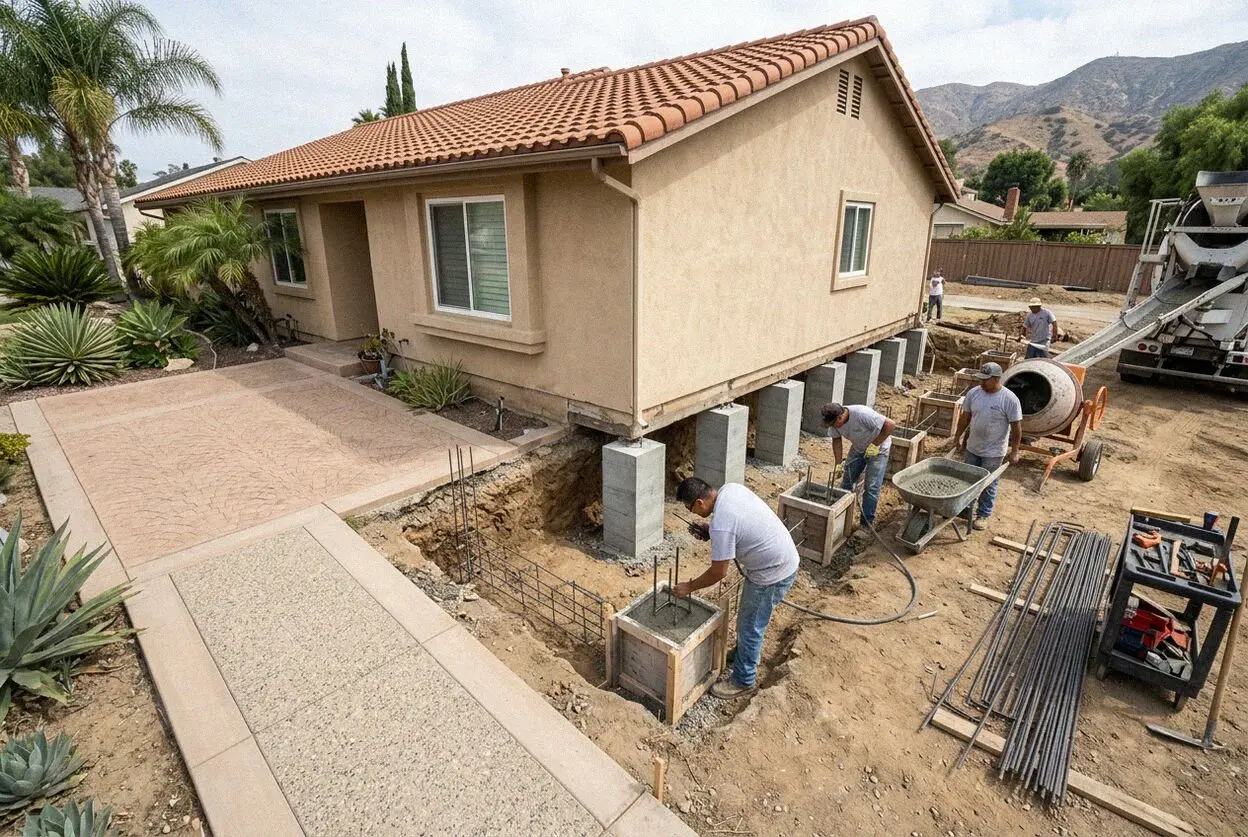
Crews lifting a dropped perimeter foundation beam in West Covina.
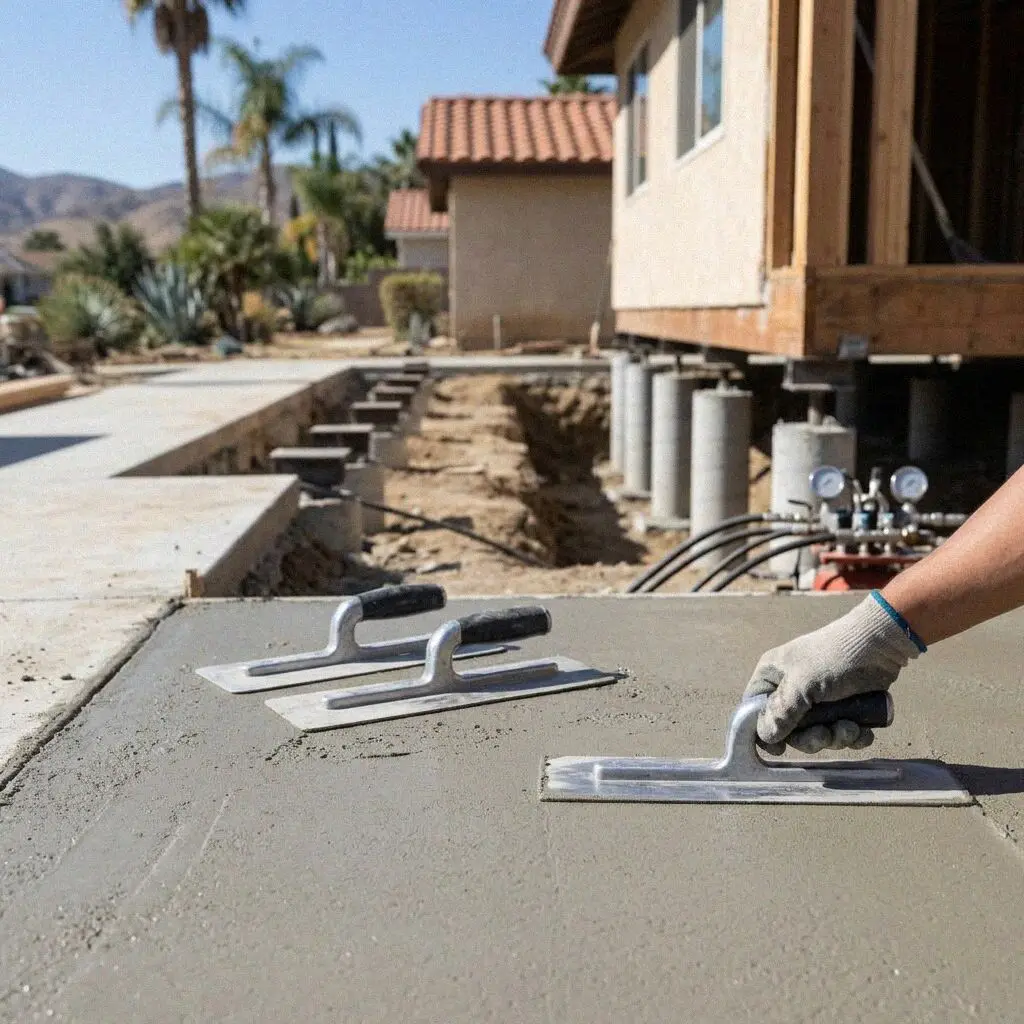
Underpinning brackets attached to a concrete stem wall in West Covina.

Local Lifting

Raising Sinking Foundations Across West Covina

Residential construction surged here through the 1950s, placing thousands of unreinforced slab foundations directly over active clay beds. According to soil data mapped by the USDA Web Soil Survey, fine textured soils throughout this part of Los Angeles County undergo high shrink and swell cycles as seasonal moisture fluctuates. When summer droughts pull moisture from shallow perimeters, outer stem walls drop unevenly and crack interior drywall.

Founder Ruben Alcaraz spent 16 years working on concrete crews before establishing Citrus West Covina Concrete in 2019. Holding a CSLB C-8 license, our team lifts sunken foundations back to true level using heavy hydraulic manifolds and high capacity steel piers. We do not inject expanding foam into active clay because surface polymers fail to address deep subgrade loss. We drive structural steel into stable load bearing ground.

Owner-occupied homes make up 64.2% of West Covina properties, and homeowners protect their equity by stopping progressive structural settlement. We carry liability insurance on every job, securing site safety while our crews dig under perimeter footings and mechanically raise unlevel framing. Once the structural pins lock and hydraulic pressures confirm solid bearing, every project receives a written workmanship guarantee against defects in how it was built.


Warning Signs

When does a West Covina foundation need raising?

Exterior Stair Step Cracks

Diagonal cracks widening along exterior stucco or concrete block stem walls signal downward movement in the perimeter beam. As underlying clay retreats during dry months, the unsupported wall shears under building weight, creating fractures that widen past a quarter inch.

Perimeter Footing Drop

Slab homes built across the San Jose Hills in the 1950s often lack deep reinforcement cages. When summer temperatures exceed 90 degrees, subgrade clay shrinks up to 3 inches away from the footing edge. The perimeter drops while the interior slab stays pinned, jamming doors.

Sticking Interior Doors

Doors rubbing on upper frames or latching incorrectly often look like simple wood swelling from humidity. In truth, an unlevel door frame reveals that the concrete footing beneath the subfloor has settled. Leaving this misalignment causes structural framing twists within a year.

Plumbing Line Separation

Settling foundation perimeters drag underground waste lines down with the moving concrete. Over three to six months, downward shear snaps brittle cast iron or ABS pipes beneath the slab. Waiting turns a mechanical foundation lift into an excavation through your finished living room.

Standard Scope

What Every West Covina Foundation Lift Includes

Permanent slab stabilization requires structural steel driven directly to load bearing strata rather than temporary cosmetic patching, securing your West Covina home against persistent soil shrinkage through every season.

Footing Excavation

Crews hand dig neat 3 by 3 foot access pits beneath each designated lift point to expose the bottom edge of the footing.

Subgrade Bearing Check

We test subgrade density beneath the exposed stem wall using a dynamic cone penetrometer to confirm base soil conditions.

Footing Notch Prepping

Technicians chip and grind the concrete underside flat, ensuring the steel bracket transfers load without point fracturing.

Heavy Steel Push Piers

We install heavy gauge structural steel pier sections manufactured to withstand up to 40,000 pounds of driving force.

Under Slab Pier Brackets

Industrial steel lifting brackets lock to the stem wall base using high tensile mechanical anchor bolts spaced 4 feet apart.

Hydraulic Manifold Lift

Synchronized hydraulic cylinders lift the entire perimeter simultaneously, holding elevation within a sixteenth of an inch.

Pneumatic Soil Backfill

Excavated earth is compacted back into place in 6 inch lifts, and excess dirt is hauled away to leave clean perimeter beds.

Workmanship Guarantee

Every completed installation is fully backed by a written workmanship guarantee against defects in how it was built.

Method Options

West Covina Foundation Lifting Methods, Compared

Selecting the correct foundation repair method determines whether your home withstands seasonal clay shifts or settles again after the first dry summer, protecting structural framing and preserving interior finishes over decades.

OptionLifespanTarget BuildMaintenanceInstallation
Hydraulic Push Piers40 to 60 years in bedrockSingle story ranch homes on clayZero maintenance after locking2 to 3 working days
Helical Steel Piers50 to 75 years in rockHillside lots with active torqueInspect exposed caps every 5 years3 to 4 working days
Poured Concrete Pits25+ years in clay base1950s ranch builds on flat lotsCheck soil drainage every 1 year5 to 7 working days
High Density Foam Lift10 to 15 years in foamInterior floors with tight accessSeal subgrade seams every 2 years1 to 2 working days

Structural pier depth and bracket placement are determined during the on site physical inspection, matching soil density to building load requirements.

Exposed foundation footing and steel pier bracket in West Covina.

Local Geology

Why West Covina Footings Sink in Hillside Clay

West Covina sits over expansive clay that shrinks during 90 degree summer heat, causing shallow 12 inch footings from 1950s residential tracts to lose bearing.

Housing across West Covina developed rapidly during the post war boom, building out subdivisions across the northern slopes of the San Jose Hills. The local soil profile features dense montmorillonite clay that swells rapidly when winter rainstorms arrive and shrinks into deep ground fissures during dry summer months. When perimeter beams settle, the City of West Covina requires permitted structural underpinning to ensure that repairs reach solid bearing strata.

With a population of 107,598 residents living across established residential neighborhoods, preserving structural stability is essential for maintaining long term home value. When unreinforced 1950s footings drop, simple mudjacking or surface patches cannot halt ongoing soil movement. We drive steel piers well past the seasonal moisture zone, reaching refusal at depths of 20 to 30 feet to transfer the house load into dense bedrock that never shifts with the weather.

Project Steps

Five Steps to Raising Your West Covina Foundation

Every structural lift follows precise engineering tolerances to restore floor elevations smoothly without inducing stress fractures in existing framing, stucco, or interior drywall.

1

Floor Elevation Survey

We map the entire slab elevation using an electronic manometer to pinpoint exact settling variations across your home.

2

Permit and Engineering

We draft site plans, file permits with the West Covina Building Division, and confirm the scheduled crew start date.

3

Excavation and Prep

Crews hand excavate 3 foot access pits beneath settled perimeter footings, inspect concrete condition, and clear loose clay.

4

Steel Pier Driving

Under C-8 supervision, steel pier tubes are hydraulically driven to load bearing refusal and locked to high strength brackets.

5

Lift and Paperwork

We hydraulically lift the foundation, backfill all soil, clean the work area, and deliver complete elevation logs on paper.

Pricing Drivers

What Determines West Covina Foundation Raising Costs

Accurate foundation raising estimates reflect verified structural load requirements and subgrade depth rather than generalized square footage formulas, ensuring your repair holds against expanding local clay.

Single Family Ranches

Post war ranch houses require pier spacing calculated from perimeter wall weight, footing thickness, and the depth of clay settlement.

Multi Family Duplexes

Shared center footings and extended firewalls increase structural load, requiring paired heavy duty brackets and deeper steel drives.

Steep Hillside Parcels

Restricted lot access and stepped slope foundations demand manual excavation and specialized portable hydraulic driving equipment.

Deep Helical Underpinning

Helical torque shafts driven through volatile strata are priced on site based on exact torque readings recorded at refusal depth.

Every West Covina property requires on site elevation mapping and footing depth measurement before an accurate written quote is prepared. (626) 263-1740 or send us a message.

Request Your On Site Foundation Inspection

We evaluate perimeter elevation changes, assess foundation stem walls, and confirm soil movement on your West Covina parcel before delivering a comprehensive written estimate for your structural repairs.

Request a Free Estimate

Written on site · No obligation

By submitting, you agree to our disclosure and consent terms, including being contacted by Citrus West Covina Concrete.

Verified Reviews

West Covina Homeowners on Our Foundation Lifting

True foundation stabilization proves itself when interior doors swing freely, exterior drywall cracks close, and the perimeter remains level through heavy rainy seasons.

Google review

“The southwest corner of our 1956 ranch home dropped nearly 2 inches into shifting clay, jamming the bedroom doors. Ruben and the crew drove 6 steel piers down 22 feet to bedrock and lifted the slab back to level in 3 days. The doors close like new again.”

M. Ramirez, West CovinaFoundation Raising · Google · 2025
Google review

“Our hillside parcel near Cortez Park had terrible side yard access and a footing that settled 1.5 inches after winter rains. They hand dug 8 pits and installed heavy brackets without disturbing our neighbor fence. The entire job took 4 days from start to finish.”

J. Okafor, West CovinaFoundation Raising · Google · 2026
Facebook review

“After the lifting was completed, the crew compacted all the soil, washed down the driveway, and walked the entire perimeter with a laser level to show the zeroed elevations. Having the written workmanship guarantee on paper gave us complete confidence.”

S. Whitfield, West CovinaFoundation Raising · Facebook · 2026

Foundation FAQ

Foundation Raising Questions Asked in West Covina

Straight answers on structural underpinning engineering, permit filings, working schedules, and long term guarantees across San Gabriel Valley clay soils.

(626) 263-1740
  • What determines foundation raising costs in West Covina?

    The number of underpinning piers and the depth required to reach load bearing bedrock govern the overall cost. Every foundation requires an individual calculation based on structural building weight, soil moisture levels, and the degree of perimeter drop. Physical access around the exterior walls also affects whether manual hand excavation or machinery is deployed on site.

  • How long does foundation raising take in West Covina?

    Most residential foundation lifts take 3 to 4 working days to complete from initial excavation to final backfill. Unusually tight access along narrow side yards or exceptionally deep clay layers can add 1 or 2 days to the digging phase. Once the steel pins lock and the brackets are secured, the foundation is fully stabilized immediately without requiring cure time.

  • What is included in a West Covina foundation lift?

    A complete lift includes footing excavation, structural steel piers, bracket mounting, synchronized hydraulic lifting, and soil backfill. Two line items often assumed to be extra charges are included as standard, such as laser manometer elevation mapping before and after the lift, along with complete off site hauling of any displaced rock or excess subgrade material.

  • Do I need a permit for foundation raising in West Covina?

    Yes, structural foundation underpinning requires a building permit from the West Covina Building Division. We prepare the site plans, submit the engineering calculations, and pull the permit directly before breaking ground. City inspectors examine the exposed footings and bracket connections prior to soil backfill, and we coordinate all required site inspections.

  • Which season is recommended for foundation raising here?

    Summer and early autumn offer the most stable conditions for underpinning before heavy winter rainstorms saturate local ground. When temperatures average 85 degrees during dry months, the clay has fully retracted to its lowest seasonal elevation, allowing piers to reach maximum depth. Working during winter rains causes muddy excavation pits and requires extra days for drainage.

  • What guarantee comes with the foundation work here?

    All structural pier installations include a written workmanship guarantee against defects in how it was built. The structural steel piers carry a 25 year manufacturer warranty against material defects. Neither guarantee covers minor cosmetic hairline drywall cracks that open during the mechanical lifting process or structural movement caused by subsequent unaddressed plumbing leaks soaking the clay.

  • Which materials and equipment do you work with?

    We install heavy gauge structural steel pier systems engineered specifically for expansive clay soils. Our crews utilize synchronized hydraulic lift manifolds paired with low profile hand dug driving cylinders that allow precise installation in tight residential setbacks. This hydraulic system applies uniform upward force across the entire footing, preventing point stress.

  • Do I need to be home while the foundation is raised?

    No, you do not need to be home during the initial exterior excavation or driving phases. We do ask that you provide clear perimeter access, move vehicles from the driveway, and keep pets indoors. You will want to be present during the final lift stage so we can walk through interior rooms together. Founder Ruben Alcaraz remains available directly by phone at all times.

Service Area

Serving West Covina and Nearby Valley Towns

Every neighboring community across the San Gabriel Valley shares the same expansive clay formations and post war foundation settling challenges we resolve here.

Show All Areas We Serve

Schedule Your West Covina Foundation Evaluation

We measure perimeter elevation drop across your West Covina slab, inspect stem wall settlement, and test clay conditions. Reach out today to receive a complete on site assessment within 1 business day.