Serving West Covina, CA and surrounding areas.(626) 263-1740
Citrus West Covina Concrete

Concrete Steps in West Covina, CA, Anchored Against Expansive Clay Soils

Citrus West Covina Concrete anchors concrete steps directly to foundations with steel rebar dowels so San Jose Hills clay cannot pull them away. Every estimate is measured and written on site

Google reviewsFacebook reviewsBetter Business Bureau reviews5.0 Stars Our customers' own rating · Facebook, Google and the BBB
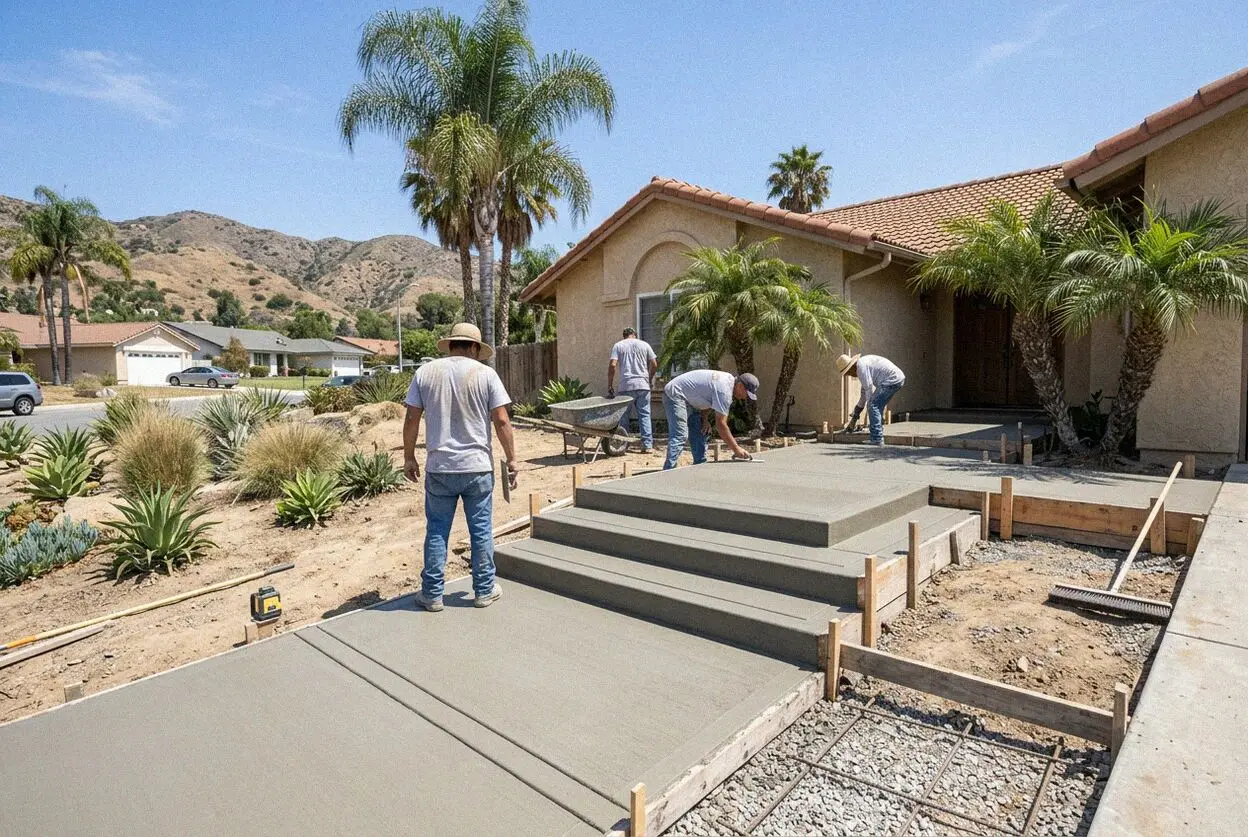
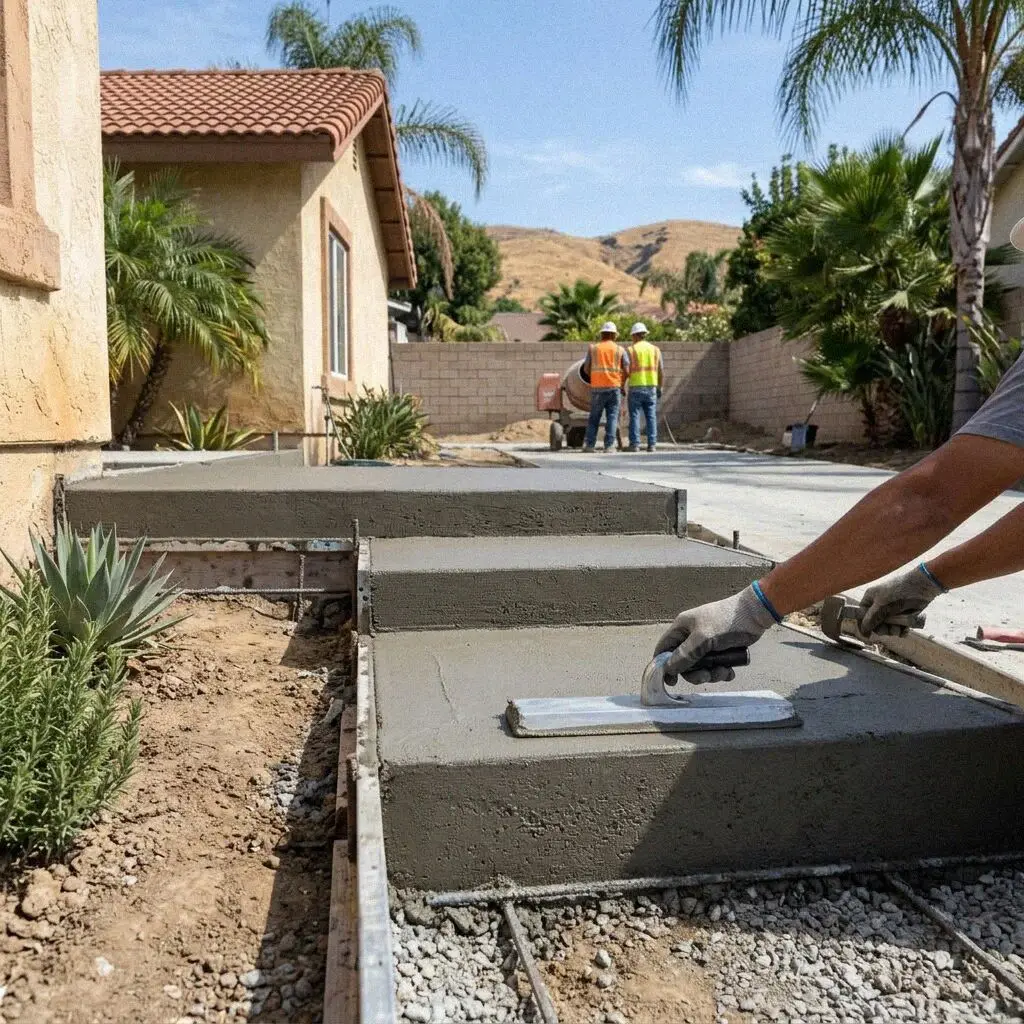
Forming new concrete entry steps at a residential home in West Covina
Finished front entry concrete steps on a ranch home in West Covina

Stair Building

Casting Front Steps Across West Covina Lots

Ruben Alcaraz established Citrus West Covina Concrete in 2019 after spending 16 years running site crews across the San Gabriel Valley. Our crews build entry stairs that withstand the shifting ground under West Covina homes. Traditional tract builds throughout the city often rested porch steps on uncompacted backfill with zero connection to the perimeter wall. Over time, ground moisture causes the clay to expand and lift, snapping the unreinforced joints.

Every project operates under CSLB C-8 licensing and carries liability insurance on every job. When steps settle unevenly, doors bind and the top landing separates from the sill plate, creating water penetration hazards during winter rainstorms. We counter this by boring deep anchor holes into the existing foundation concrete, setting steel dowels in structural epoxy, and pouring a monolithic base that prevents independent stair movement.

Data from the USDA Web Soil Survey confirms the high shrink and swell capacity of clay loam surrounding the San Jose Hills. With owner-occupied homes at 64.2% across the community, maintaining structural entry access protects property value and foot safety. We pour stairs using 4,000 pound per square inch mix designs poured over crushed aggregate rather than uncompacted native dirt.


Warning Signs

When should West Covina entry steps be rebuilt?

Gap at the Porch Landing

A horizontal gap opening between the top step and your entry door threshold indicates subgrade subsidence. When rainwater enters this opening, moisture softens the supporting soil further and accelerates stair rotation away from the exterior wall framing over several months.

San Jose Hills Clay Rotation

Homes built in the 1950s frequently endure severe stair settlement caused by expansive clay movement across local hillsides. Unanchored stairs tilt forward as summer ground shrinks by several inches, pulling the concrete away from the front porch and snapping water lines.

Hairline Nose Cracks

Fine fractures running along the front nosing of treads appear purely surface level at first inspection. Unsealed fractures permit water intrusion that corrodes internal steel wire over two wet seasons, causing outer concrete edges to spall and disintegrate under foot traffic.

Uneven Riser Heights

A sinking bottom step that alters standard riser heights by more than a quarter inch creates a persistent trip hazard for household members. Leaving settled steps through a six month rainy period allows moisture to undermine the base, tripling eventual site excavation scope.

Standard Scope

What Every West Covina Step Build Includes

Properly anchored entry steps require tied steel reinforcement, deep base preparation, and unified code compliance so the structure stays level against West Covina clay movement across decades of seasonal moisture changes.

Demolition and Removal

We break out fractured masonry steps and haul all rubble off site so the underlying grade is cleared completely.

Subgrade Compaction Test

Crews test exposed subgrade soil density and excavate unstable loose pockets down to firm structural ground.

Crushed Aggregate Base

A 4 inch layer of crushed aggregate is mechanically compacted to halt expansive clay heave beneath concrete treads.

Structural Concrete Mix

We place 4,000 pound per square inch structural concrete mix as standard to prevent early moisture deterioration.

Rounded Safety Nosings

Step edges are hand tooled with rounded radius nosings that resist heavy chipping and surface edge fractures.

Foundation Rebar Dowels

Half inch steel dowels set 6 inches into the perimeter footing hold the steps firmly against ground rotation.

Complete Site Clean Up

Crews wash walkways, haul leftover debris, and sweep all adjoining surfaces before the final inspection walk.

Workmanship Guarantee

Our finished stair builds include a written workmanship guarantee against defects in how it was built covering structural execution.

Build Options

West Covina Concrete Step Finishes, Compared

Choosing the right concrete step finish balances slip resistance against architectural styling while ensuring the underlying stair structure remains anchored against West Covina ground movement across decades of weather.

OptionLifespanPrimary UseMaintenanceCure Time
Broom Finish Steps30 to 40 yearsFront entries needing gripPower wash every 2 years3 days until foot traffic
Stamped Concrete25 to 35 yearsRanch style entries and patiosReseal every 3 years4 days until foot traffic
Exposed Aggregate35+ years of service lifeMidcentury 1950s ranch homesPenetrating sealer every 4 years3 days until foot traffic
Poured Cantilever30 to 40 yearsSteep San Jose Hills slope lotsInspect joints every 3 years4 days until foot traffic

We review step elevations, soil slope, and architectural details on site during the measuring visit before finalizing your written specification.

Concrete entry steps poured against a hillside house in West Covina

Local Ground

What West Covina Hills Demand from Concrete Steps

Steep 15 degree slope grades and summer temperatures over 95 degrees dry out local subgrades, making unanchored steps pull loose from West Covina homes.

Across West Covina in Los Angeles County, residential developments constructed during the midcentury boom placed porch steps over shallow uncompacted soil. As moisture drains rapidly down hillside grades, subgrade clay shrinks and deprives front steps of uniform bottom support. Without deep footing dowels, steps rotate forward and shear away from the home foundation wall. Our team builds every stair flight with tied steel dowels that anchor the concrete securely.

With an average household size of 3.91 people using front entries daily, stair safety and tread consistency are critical. When steps drop even a half inch, the top step becomes an irregular trip hazard that fails local building standards. We excavate down to verified bearing soil, install crushed aggregate, and place steel reinforcing bars through each tread and riser. This engineering keeps the steps level whether the surrounding yard is soaking wet or dry.

Work Sequence

How We Build Concrete Steps in West Covina

A structured build process guarantees accurate step dimensions, robust foundation ties, and a smooth finish that resists West Covina soil movement without unplanned job site delays.

1

Site Measurement and Plan

We measure doorway elevation drops and test ground stability on site to calculate exact riser heights before writing your bid.

2

Permitting and Scheduling

You select step textures while we file permits through the West Covina Building Division and lock in a firm calendar start date.

3

Excavation and Doweling

Day one clears old broken steps to concrete recycling, digs to firm clay, and sets epoxy steel dowels into foundation footings.

4

Forming and Concrete Pour

Crews place wood forms, tie rebar cages, and pour 4,000 PSI concrete under direct supervision by an experienced crew lead.

5

Finishing and Hand Over

We sweep the lot, haul remaining materials, walk the cured steps with you, and deliver your signed guarantee paperwork.

Pricing Factors

What Determines Your West Covina Step Estimate

Stair construction estimates reflect structural ground conditions, required demolition, and footing depth rather than arbitrary calculations, ensuring your quote covers exactly what your property requires.

Single Family Entry Steps

A standard two or three riser porch entry on level dirt requires baseline excavation, rebar dowels, and two cubic yards of mix.

Multi Unit Common Stairs

Stairs serving multiple residential units require wider landing widths, commercial safety railings, and extended hand tooled nosings.

Steep Hillside Lot Access

Properties in the San Jose Hills with steep slope access demand hauling materials manually and specialized deep footing trenching.

Decorative Stamped Steps

Color pigments, powdered release agents, and textured pattern stamp mats must be evaluated on site against home exterior tones.

Our owner inspects existing site footing access, tread counts, and subgrade elevation on site before providing a clear written figure. (626) 263-1740 or send us a message.

Schedule Your On Site Step Estimate

We evaluate your entryway foundation, measure riser spans, and deliver an exact written quotation for your project with within 1 business day, ensuring your concrete steps remain solid for years to come.

Request a Free Estimate

Written on site · No obligation

By submitting, you agree to our disclosure and consent terms, including being contacted by Citrus West Covina Concrete.

Client Feedback

West Covina Homeowners on Our Concrete Steps

Real homeowners across West Covina describe how our anchored concrete entry steps solved chronic foundation separation, trip hazards, and uneven stair settling on their lots.

Google review

“Our front porch steps had pulled 2 inches away from the stucco wall after years of ground settling. Ruben measured the drop, drilled rebar into the footing, and poured a solid four step flight in two days. The entry feels immovable now and looks completely level.”

Marco G., West CovinaConcrete Steps Replacement · Google · 2025
Google review

“Carrying concrete up our steep hillside lot near Cortez Park seemed nearly impossible. The crew set up wheelbarrow ramps, anchored six deep risers into bedrock, and completed the job in three days. The steps have zero wobble and drainage flows cleanly away.”

J. Okafor, West CovinaHillside Concrete Steps · Google · 2026
Facebook review

“After the pour cured, Ruben walked every step with us to inspect the broom texture and handed over our written guarantee papers. A minor question about sealing came up two weeks later, and he phoned back right away to clarify maintenance. Solid workmanship.”

S. Whitfield, West CovinaEntry Steps Construction · Facebook · 2026

Common Queries

Concrete Step Questions Asked in West Covina

Clear answers on stair construction details, municipal permits, curing durations, and workmanship coverage help you plan your West Covina concrete project.

(626) 263-1740
  • What determines the cost of new concrete steps?

    Total cost is governed by the total number of risers, subgrade excavation depth, site accessibility for concrete delivery, and structural foundation tie requirements. Demolishing heavy existing unreinforced masonry adds labor time and disposal volume. Upgrading from a standard broom finish to decorative stamping or integral color also shapes the final estimate figure.

  • How long does concrete step construction take?

    A standard set of front entry steps takes 2 to 3 working days from initial demolition through final broom texturing. Steep hillside slope access, difficult subgrade conditions, or rainy weather will extend the preparation timeline by an extra day. Foot traffic can resume after 3 days of curing, while heavy loads should be withheld for 28 days for full structural strength.

  • What is included in a concrete step build?

    Every project includes site demolition, subgrade excavation, formwork carpentry, steel rebar reinforcement, concrete delivery, placement, and clean finish tooling. Debris disposal and foundation doweling are standard inclusions rather than extra charges. These appear as distinct line items on your written estimate so you can verify every operational stage before signing.

  • Do I need a building permit for entry steps?

    Yes, rebuilding structural porch steps or modifying doorway elevations requires a permit through the West Covina Building Division, which we prepare and submit on your behalf. Minor surface patches do not need permits, but any work altering exterior grade access or building retaining walls over 4 feet requires municipal plan review to satisfy regional safety codes.

  • When is the ideal time of year to pour steps?

    Fall and spring offer ideal conditions for pouring concrete steps in this region. Mild temperatures between 65 and 75 degrees allow consistent cement hydration without the flash drying caused by summer heat waves exceeding 90 degrees. Pouring during wet winter stretches risks rainwater pitting the fresh surface, requiring protective coverings that delay the cure schedule.

  • What guarantee comes with the finished steps?

    The work includes a written workmanship guarantee against defects in how it was built alongside standard manufacturer material warranties. We stand behind our structural forms, dowel placements, and finishing execution. The guarantee does not cover normal surface abrasion from decades of foot traffic or structural damage caused by uncontrollable earthquakes and severe regional ground faults.

  • Which materials and equipment do you use on site?

    We pour 4,000 PSI ready mix concrete from local suppliers, reinforced with grade 60 steel rebar dowels and compacted aggregate subbases. Hand tampers and vibratory plate compactors secure the subgrade, while specialized step forms ensure precise riser dimensions. For decorative upgrades, we work with integral color pigments and specialized polyurethane texture stamps.

  • Do I need to be home while the steps are built?

    No, you do not need to be on site while our crew works outside, provided exterior power and water access are unlocked. Before we arrive, ensure vehicles are parked clear of the driveway and keep household pets indoors. Foot access through the entry must stay clear for 3 days post pour, and Ruben Alcaraz remains directly reachable by phone if any site question arises.

Service Area

Building Steps in West Covina and Beyond

Our crews travel throughout the San Gabriel Valley, bringing anchored step construction techniques and dedicated subgrade preparation to neighboring communities.

Show All Areas We Serve

Build Stable Concrete Steps in West Covina

We inspect entry foundation depth, measure doorway elevation drops, and evaluate hillside soil settlement on your lot. Reach out today to receive your written quote within 1 business day.